Wednesday, December 23, 2009

2010 BMW ActiveE Concept Car Powered By A New Synchronous Electric Motor Specially Developed For This Vehicle

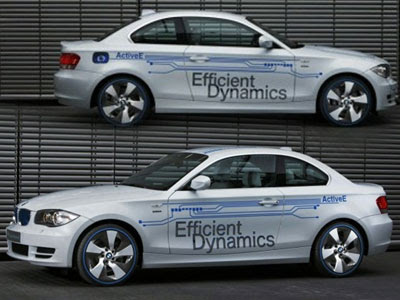
2010 BMW ActiveE Concept Car

Introducing the BMW ActiveE Concept, the latest electric vehicle project under BMW Group's initiative to produce vehicles that explore solutions to minimize environmental impacts while preserving the kinetic driving experience for which BMW has long been known. The BMW ActiveE Concept follows the all-electric MINI E as the second large-scale electric vehicle test program to be conducted in the hands of interested customers.
The BMW Concept ActiveE is based on the BMW 1 Series Coupe. The BMW Concept ActiveE is powered by a new synchronous electric motor specially developed for this vehicle. Its maximum output is 125 kW/170 bhp, the maximum torque of 250 Nm / 184 lb-ft is available from standing as is typical for electric motors and remains available over an unusually broad load range.
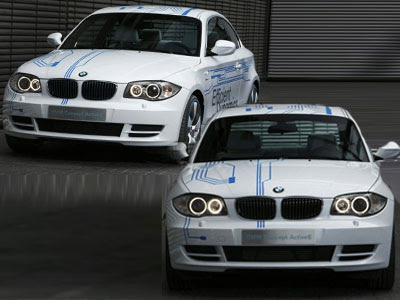
2010 BMW ActiveE Concept Car

Predicted driving performance figures: acceleration from zero to 60 km/h (37mph) in less than 4.5 seconds and from zero to 100 km/h (62mph) in less than 9 seconds, maximum speed: approx. 145 km/h (90 mph, electronically limited). As with the MINI E, the real-world range is expected to be about 160 km / 100 miles on a single charge, depending on conditions (FTP72 cycle range is calculated to be 240 km / 150 miles in simulation).
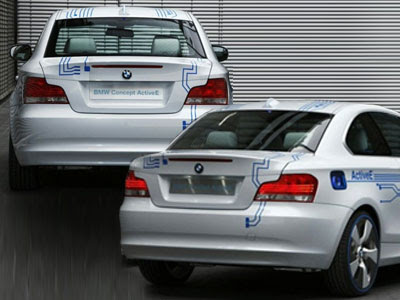
2010 BMW ActiveE Concept Car

The electric drive system draws its energy from new, advanced lithium-ion battery pack developed jointly by BMW and the co-operation partner SB LiMotive especially for the BMW ActiveE Concept. They enable a range of approx. 160 kilometres (100 miles) in everyday use. An intelligent battery management system helps achieve this range largely independently of external climatic conditions. Additionally, the charging period required for the lithium-ion batteries is very short. On the European power grid, the battery pack can be fully charged in just 3 hours at a wall box with a current of 50 ampere at 230/240 volts. In North America, using a high-current (32 ampere continuous) residential wall box, the charge time is about 4.5 hours.
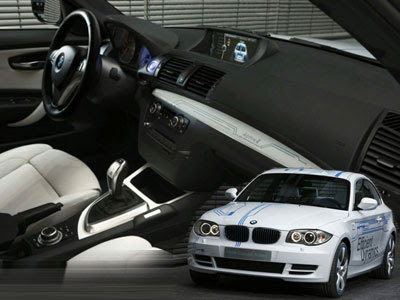
2010 BMW ActiveE Concept Car

There is a clearly recognizable differentiation from the serial production model of the BMW 1 Series Coupe with the body finish in Liquid White metallic, as well as graphic elements derived from printed circuits in Electric Blue on the hood, doors, roof and trunk lid, as well as the lettering “ActiveE”, “eDrive” and “EfficientDynamics” on the doors and side panels. Specific light-alloy wheel wheels, the lack of an exhaust system and blue illuminated elements such as the roof fin and charging connection highlight the special character of this electrically powered concept vehicle.
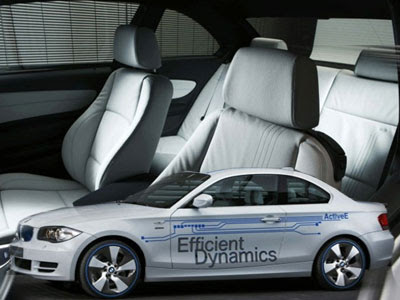
2010 BMW ActiveE Concept Car

In the BMW ActiveE Concept, new BMW ConnectedDrive services are presented which have been designed exclusively for use in an electric vehicle. This includes specific remote functions which enable the use of a mobile phone to check the charge status of the battery, search for public charging stations and activate the vehicle’s auxiliary heating and air conditioning functions. The BMW ActiveE Concept creates a basis for the expansion and intensification of this field testing on electro-mobility, oriented towards enabling large-scale production in the future. The aim is to produce a fleet to a scale which will exceed that of the MINI E. The BMW ActiveE Concept moves a little closer towards the future of an individual mobility which will combine driving pleasure with CO2-free travel.

Monday, December 21, 2009

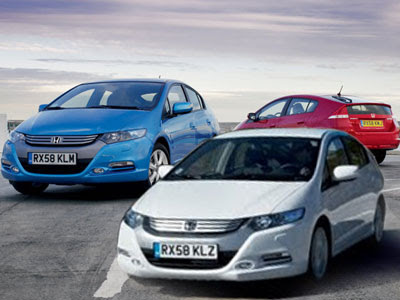
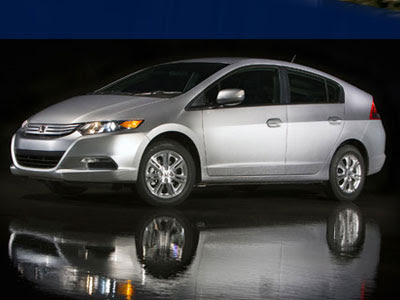
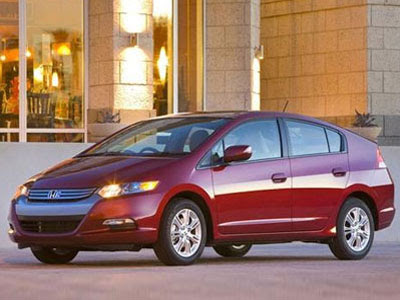
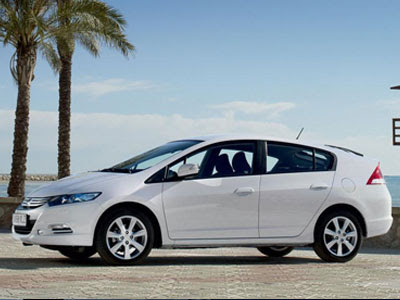
2010 Honda Insight EU Version Called 'Aero Athlete' Concept

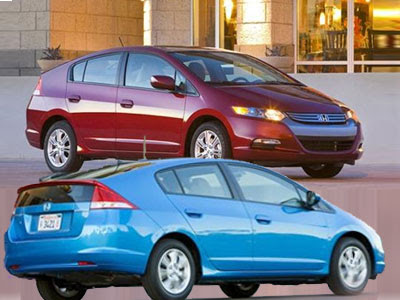
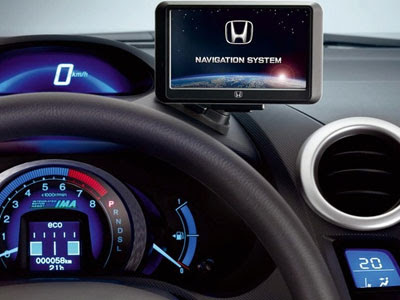
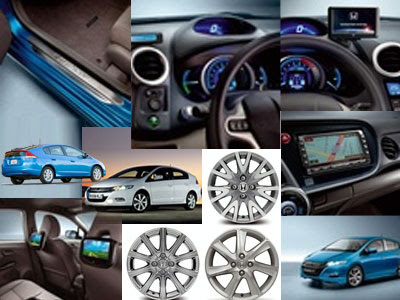
2010 Honda Insight EU Version

Although the Honda Insight design team started with a blank piece of paper - in that this was a brand new model with no history - they faced many challenges in creating the exterior appearance of the Honda Insight.
On the one hand, as a low emission hybrid car, it had to express environmental credentials - it had to look like a 'green' car - but on the other hand it had to appear dynamic and fun to drive; part of Honda's key design principles. Above all, in line with the positioning of Honda Insight, the design had to appeal to a broad range of people.
2010 Honda Insight EU Version

While the 'greenness' of the car may have challenged the sporty direction of the overall design, in some areas it actually helped the dynamic cause. Because the newly-developed IMA system is more compact, it meant the nose of the car could be shorter, creating a snubbed, more aggressive look to the front end.
Another important factor that led (and to some extent restricted) the exterior design was the bodystyle itself. To appeal to as many people as possible, a 5-door layout was chosen, and this brought its own challenges, particularly when optimising the aerodynamics of the car, and creating enough headroom for passengers in the rear.
2010 Honda Insight EU Version

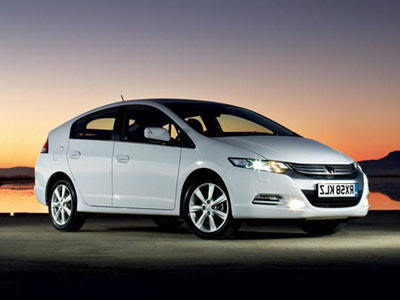
The Insight adopts slim, projector-style headlights in a 4-light cluster. The headlight's low beam has blue detailing, and the indicators are located in the lower bumper face.
Firstly, the line from the centre of the roof to the top of the boot lid is at the optimum angle for controlling the flow of air off the top of the car, with minimum turbulence. Also, you'll notice that the top half of the body tapers in towards the rear of the car, which also helps the air flow travel smoothly over the car. Stable air flow over this section helps the car pass through the air with minimal drag.
2010 Honda Insight EU Version

"The concept for the main shape of the car is called 'Aero Athlete'," says Mr Minowa. "It reflects a sporty, lean body with no fat, the tension of muscles and nothing unnecessary added." The Honda Insight is fitted with a seven-spoke alloy design, to enhance the sporty image of the car.
All Honda Insight grades are equipped with Honda's Vehicle Stability Assist (VSA) system, designed to assist the driver in maintaining control during cornering, acceleration and sudden manoeuvres by applying braking to the right or left hand wheels as necessary and managing the engine torque systems.
2010 Honda Insight EU Version

Honda's IMA hybrid system concept is now 10 years old - having made its debut in the original Insight back in 1999. IMA stands for Integrated Motor Assist, which consists of a low-friction 1.3 litre engine that serves as the primary power source, an ultra thin electric motor, a lightweight and compact battery with a continuously variable transmission.
This system has been used successfully in not only the Honda Insight, but also the Civic IMA, and its successor, the Civic Hybrid. Over the years the system has evolved and become smaller, more lightweight and less expensive to produce, and the latest version in the new Honda Insight is the most advanced IMA technology introduced by Honda to date. The fifth generation IMA system in the Insight is 24% more compact than the fourth generation system freeing up space for luggage.
2010 Honda Insight EU Version

The engine itself is new, but is based heavily on the 1.3-litre from the Civic Hybrid. This modified i-VTEC unit from the Civic Hybrid has been further enhanced with lessons learned from the Jazz incorporated to improve fuel economy. The low friction, pattern coated piston design has been combined with a new catalyst design to further optimise this already highly efficient power unit. These measures along with a further stabilised combustion process give a fuel economy improvement for the engine alone of 2% on what is already a highly-efficient unit.
2010 Honda Insight EU Version

When combined, the motor and engine produce lively performance ideal for urban environments, with good throttle response and acceleration times to rival conventional 1.6-litre petrol cars with automatic gearboxes. The Honda Insight reaches 100 km/h from a standing start in 12.6 seconds, and goes on to a top speed of 186 km/h.
2010 Honda Insight EU Version

Using a CVT transmission in a hybrid provides smooth and predictable gear transitions and helps keep the IMA system operating in its most efficient range. In the Insight, an evolution of the high-torque CVT unit from the Honda Civic Hybrid is used.
This version of CVT has a lower final drive gear ratio (4.200 from 3.937), which results in faster-acting initial acceleration performance.